Never boil and never use bleach. I’m not sure how those methods keep getting passed around. Both can seriously damage bone.
Depending on the state of decay, it’ll be easier for you to just put it in a lidded tub of water with some dawn soap or biological washing powder and let it sit somewhere warm for a while. If most of the flesh is already gone it shouldn’t take more than a few weeks. Remember to keep track of the teeth because they’ll probably fall out at some point. This is going to smell, so make sure you’ve got it somewhere it won’t be bothered.
After the flesh is off, you have the option of degreasing and whitening if you want. To degrease, you can use ammonia or heated water with dawn. I use ammonia because I find it’s easier, but remember not to mix it with other chemicals and always work somewhere well-ventilated. Also, ammonia has to be recycled at a chemical recycling center, you can’t just dump it down the drain. If you use dawn, the water has to be heated constantly, so if you have a heated bucket or fish tank heater, that would be your best option. With either option, this step takes a few more weeks.
If you want it whitened, you can put it in a bath of hydrogen peroxide overnight. You won’t get a very bright white unless it’s been fully degreased, though. I do suggest degreasing, because it preserves the bone longer and removes any oils that might come to the surface over time.
If you have any more questions, let me know. Good luck!
Mummifying is a good option – either whole or in parts (wings/feet/etc)
You could clean up the bones, I accidentally cleaned some g.oldcrest bones once (including skull) by just putting the carcass under a tub. The danger with that is, because it is so tiny, you run the risk of the maggots breaking the skull.
You could find an ants nest, skin it and put it inside something with small holes to let them clean the flesh without running off with smaller bones.
You could macerate, either just loose in a tub and make sure you strain the bones well when emptying the water, or inside some tights or other mesh like material.
You could, even, skin and deflesh as much as you can, and use the oxidation method:
I’ve not tried this myself but I want to. I’ve cleaned some mummified bones (including a blue t.it skeleton) by just soaking them in peroxide and picking off what I could.
Good luck anon! I hope it goes well. I have a w.ren in my freezer I’m going to attempt to clean soon, fingers crossed for our tiny birds
Arm length gloves for shifting through large maceration tubs
Spade (digging through rot pots)
…Gloves…
Wet Preserves:
Glass jars
Formalin
70% Isopropyl Alcohol
Syringes
Gloves from glove world
Dry Preserves:
Salt/Borax
91% Isopropyl Alcohol
Tubaware
Guantes (that’s Spanish, for gloves)
Jackal’s Closet of Vulture Magic:
PHEW, ok long list but that’s pretty much everything that like to have at all times depending on what I’m processing and how I decide to process it c:! The more/better tools and supplies you have the more options you have for salvaging as much of the animals you get as you can ;o;! I also suggest buying things like salt, gloves, and peroxide in bulk since you’ll p much always need thing like that, and pick up items though necessity as you go! I hope this helps c:
Hello! Ahh, I remember when I first started processing deads.
It took me a while to get used to it properly… like, I was very interested and fascinated and that drove me foreword, but I felt so… weird about seeing the gore and skinning and seeing them half decomposed. It was low-key horrific but I was too intrigued to stop. I remember watching a badger decompose in the woods, visiting it every couple days and it felt like a magical experience, honestly. I always wanted to get closer but I also didn’t want to get close :’)
You may get used to it. I think it depends on the person, but I definitely have. Things like maggots and guts used to squick me and I would have to keep stopping, counting to ten and telling myself “this is normal, this is fine, this is normal, this is fine” and well. Now I don’t bat an eyelid. Infections and sometimes saliva can still eek me, but that’s it really.
Basic stuff I keep handy for processing:
Gloves
Bucket/tub
Bags
Scalpel/knife (+ pliers to change blade)
Plastic sieve
Small stick to scramble brains
Other useful stuff:
Lots of little cups (teeth/claws)
Fishtank heater
Scissors
Tweezers
A way to keep away scavengers (cage, brick, inside shed etc)
Dish soap
Biological washing powder
Hydrogen peroxide
Isopropyl alcohol (I love using this to make mummies + clean)
Antibacterial hand gel
Possibly a tarp, though I tend to skin/deflesh over bags and then hose down area
Something to take pics with
Slow cooker if you want to try it
Somewhere to hang carcasses to skin them (I don’t have this and I need something badly!)
Good luck anon! This is very exciting. I hope everything goes well for you – bring on the warmer weather!
I couldn’t bear to see this GORGEOUS hawk laying in the middle of the road. I couldn’t stand the thought of it being ran over, or crushed. A truly magnificent creature! This is the first hawk I’ve had my hands on… and let me tell you, it was amazingly beautiful! Its feathers were so soft. It hadn’t been there long before I found it, and other than a broken leg I could see no visible damage. Such a precious creature. Even under the terrible circumstances, I considered it an honor to even touch it, to have the chance to see the beauty up close and in such lovely detail. I arranged these flowers to show my respect, then returned it to the forest, to rest among the moss. The middle of the road isn’t fitting grave. From death comes life, this amazing creature will turn into soil, rich and ready for new life. Strange and beautiful how life works. RIP sweet angel.
(P.S. its eye is not white because of death, that is actually its eyelid! It comes for the bottom instead of the top, I thought that was really cool! )
Before and after the degreasing and whitening. I use acetone to degrease and it takes a while, but acetone can be reused until it turns a darker orange. Just remember to wear a face mask and work in a ventilated area while using it. Acetone also requires storage in a cool place, and can’t be poured down the drain to dispose of it. My township has a chemical recycling program, thankfully.
The other option for degreasing is keep the bones in heated, soapy water, but it has to be heated constantly. You can do this with a fish tank heater and a plastic tub, from what I can tell. I’ll look into that method at some point, if I ever have a place to work outside of the house (which isn’t looking good right now, but you never know.)
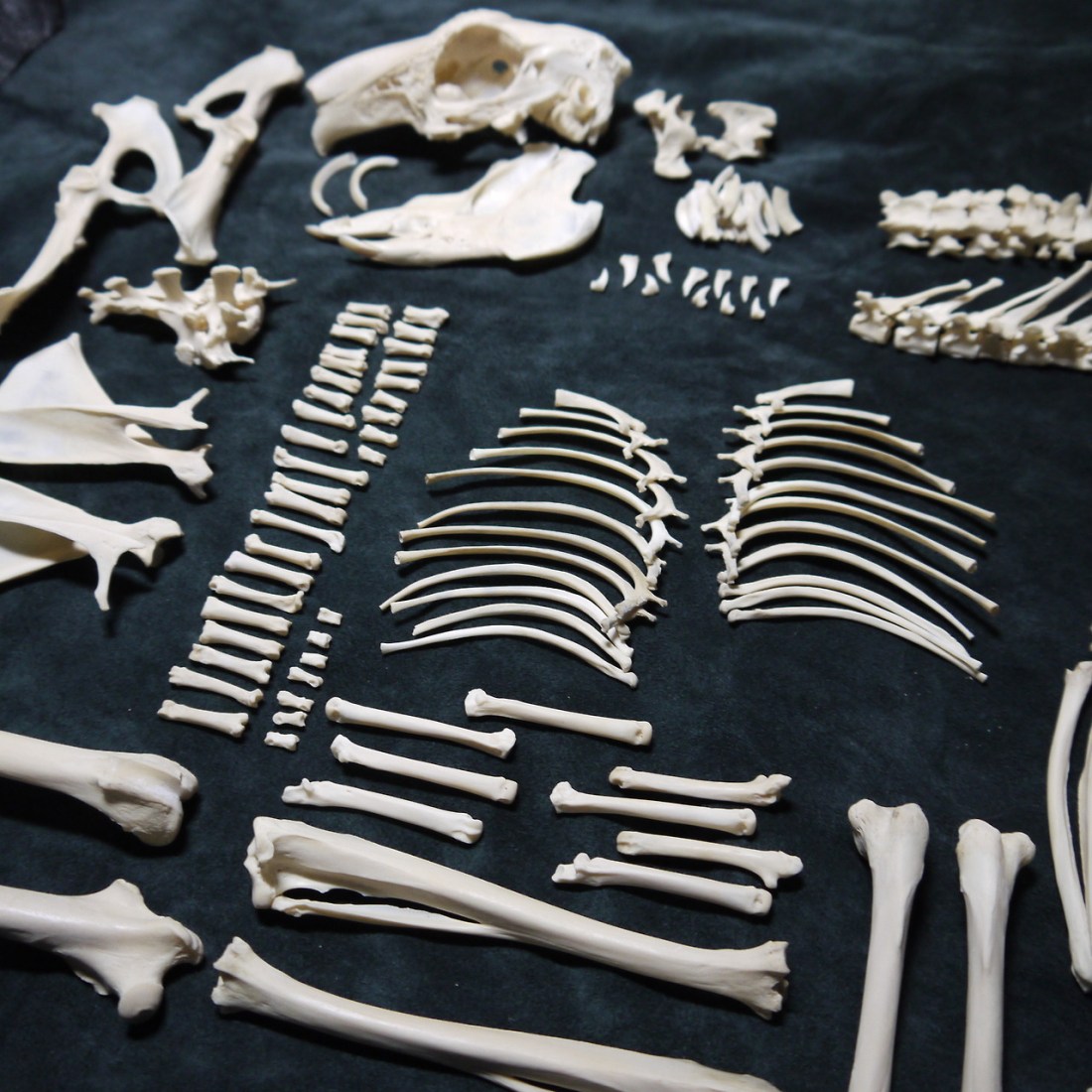
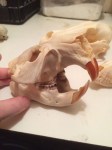
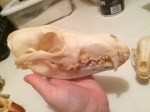
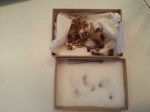
tiny tiny chip.munk bones! the skull got pretty wreaked, I couldn’t tell if it got broken or if it’s just the natural seams in the plates coming apart, but I salvaged most of the pieces, even if I completely lost track of where they go and how. I got a paw and a bit of a leg that I didn’t want to clean and separate completely, so I’m drying them in salt and hopefully that’ll work. never done anything like that before, so we’ll call it an experiment.
pretty proud of myself for cleaning it, it’s my first time going from wet corpse to clean bones! might string the vertebrae on something and make earrings








 churchyardgrim